9/2/2026
Data Centers and Sustainability: Building the Digital Future Without Costing the Earth
For years, data center operators have focused heavily on efficiency. One widely used measure is Power Usage Effectiveness (PUE), which compares the total energy consumed by a data center with the energy used by its IT equipment. You can check how PUE/WUE works by clicking here https://easyconvertsnms.com
Data Centers and Sustainability: Building the Digital Future Without Costing the Earth
Every time we stream a movie, send a message, make an online purchase, use AI, or save a photo to the cloud, something happens far beyond the screen.
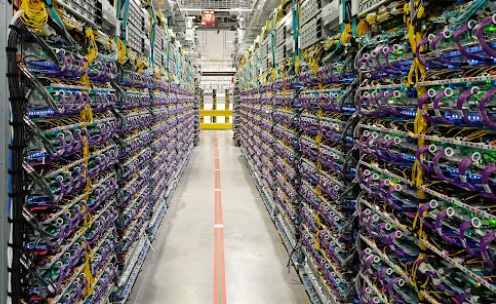
Somewhere, in a highly engineered facility filled with servers, cooling systems, power equipment, and miles of cables, our digital activity is being processed and stored.
That place is a data center.
Data centers are the invisible infrastructure powering our increasingly connected world. But as demand for cloud computing, artificial intelligence, digital services, and data storage accelerates, an important question is becoming impossible to ignore:
Can we build the digital future without putting unsustainable pressure on the planet?
The answer lies in making sustainability a fundamental part of how data centers are designed, built, and operated.
The Growing Energy Challenge
Data centers require enormous amounts of electricity.
Servers need continuous power to process workloads and store information. Cooling systems work around the clock to prevent equipment from overheating. Lighting, networking equipment, backup systems, and other infrastructure add to the overall energy demand.
And demand is rising.
The growth of AI is particularly significant. Training and operating increasingly powerful AI models requires substantial computing capacity, which means more servers, more electricity, and more cooling.
But the challenge isn't simply about using less energy.
It's about creating an entirely different approach to digital infrastructure.
From Energy Efficiency to Sustainable Infrastructure
For years, data center operators have focused heavily on efficiency. One widely used measure is Power Usage Effectiveness (PUE), which compares the total energy consumed by a data center with the energy used by its IT equipment.
Improving PUE can reduce wasted energy, but sustainability goes much further.
A truly sustainable data center considers its entire environmental footprint:
Where its electricity comes from How efficiently it uses energy How it manages heat How much water it consumes What happens to equipment at the end of its life How its buildings are constructed How renewable energy is integrated How efficiently computing resources are utilized
In other words, sustainability isn't just about building a more efficient server room. It's about rethinking the entire lifecycle of digital infrastructure.
The Rise of Renewable Energy
One of the biggest opportunities for data centers is the transition toward renewable electricity.
Solar, wind, hydroelectric, and other low-carbon energy sources can significantly reduce the carbon footprint associated with powering computing infrastructure.
But simply purchasing renewable energy certificates isn't necessarily enough.
The next generation of sustainable data centers will increasingly need to think about where and when electricity is generated and consumed.
Could a data center operate workloads when renewable electricity is most abundant?
Could computing demand be shifted to locations with cleaner energy?
Could data centers work alongside the electricity grid rather than simply consuming power from it?
These questions are transforming data centers from passive energy consumers into potential participants in a smarter, more flexible energy ecosystem.
Cooling: The Hidden Sustainability Challenge
There is another resource that deserves attention: water.
Traditional data center cooling can require significant amounts of water, particularly in certain climates and cooling configurations.
As data centers expand into new regions, water availability is becoming an increasingly important consideration.
Innovative cooling technologies are changing the equation.
Liquid cooling, for example, can remove heat from high-performance computing equipment more efficiently than traditional air-based systems. Other approaches include advanced heat exchangers, free cooling, and systems designed to reuse waste heat.
This leads to an exciting possibility:
What if the heat generated by a data center wasn't considered waste at all?
Turning Waste Heat Into a Resource
Data centers produce enormous quantities of heat.
Instead of releasing that heat into the atmosphere, some facilities can capture and redirect it for useful purposes.
Waste heat can potentially support district heating systems, greenhouses, industrial processes, or other nearby applications.
Imagine a data center that doesn't simply consume electricity and produce heat, but instead becomes part of a local energy ecosystem.
That changes the conversation from:
"How do we reduce the environmental impact of this data center?"
to:
"How can this data center create value for the environment and the community around it?"
Designing for the Circular Economy
Sustainability also extends beyond electricity and cooling.
Data center equipment has a finite operational life. Servers, networking hardware, batteries, cables, and other components eventually need to be replaced.
A sustainable approach asks what happens next.
Can equipment be refurbished?
Can components be reused?
Can valuable materials be recovered?
Can data center buildings be designed for adaptability rather than demolition?
The principles of the circular economy provide an opportunity to move away from the traditional model of "build, use, discard" toward systems where resources remain useful for as long as possible